Application to purchase input

Large format eco solvent printer duty is a site question

A large format eco solvent printer is not defined by a marketing width alone. Write the media width, the printable width, the longest panel, the roll weight the crew can load, and the hours the shop actually prints.

Headline speed is a screening number. Throughput belongs next to resolution, pass count and media. Ambient temperature and solvent ventilation are part of the utilities requirement, not a later surprise.

Open the evidence checklist
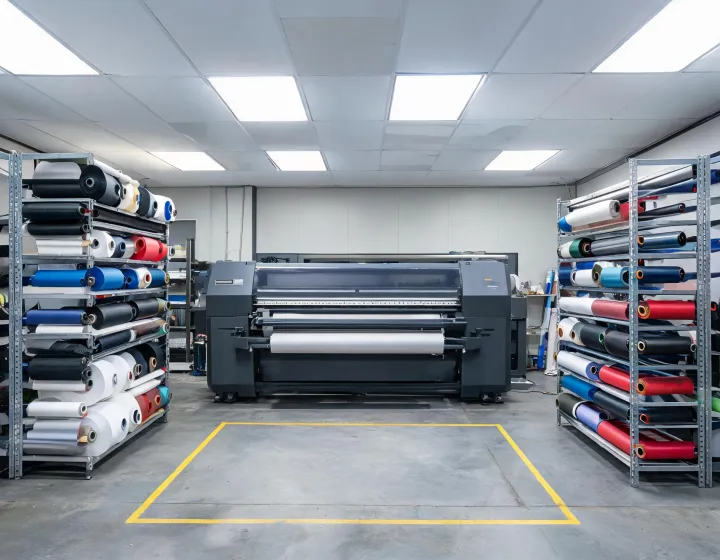
Wide-format printer installed between roll racks in a production sign shop
Printable width
Ask in mm or inches, separate from roll width
Duty hours
State shifts so heater and head duty can be described
Service access
Rear, side and overhead clearance for roll changes

Shop situations inside this equipment family

Screen large-format rooms with measurements, not adjectives. A 1,600 mm roll needs a different path than a 1,370 mm roll. Write both the roll width and the printable width. If the crew changes rolls twice per shift, say so, because that is the duty the take-up and the service access must survive.

Sign shops printing pressure-sensitive vinyl

Record film, liner and laminate. Outdoor graphics need a stated weathering question, not a borrowed durability claim. Pair this row with the vinyl inquiry options when the media is the reason for the purchase.

Shops that also contour-cut

If the large-format frame must feed a cutter, say whether cut files leave the same RIP. The printer and cutter scope keeps registration and blades on the quotation.

Production rooms with limited power

Input voltage, frequency and phase have to match the building. A machine described for a different mains standard is a specification deviation until a transformer or a different build is quoted in writing.

Rooms that need odor control

Eco-solvent ink still needs a ventilation plan. Ask the supplier which exhaust note applies to the proposed model, and have facilities confirm the path. Do not treat a mild-solvent label as a substitute for that note.

Documents and acceptance checks for wide-format installs

Which drawing is current?

Request a dimension drawing for the exact model, including take-up and the working envelope with the largest roll you named. Mark the revision. A generic family outline is only a starting sketch.

What does the datasheet actually test?

Resolution and speed figures need the media, ink and pass count. That is the difference between a headline rating and a stated test basis. Put both in the comparison sheet.

How is acceptance defined?

Agree the factory acceptance test media and the incoming check at your dock. Name who signs print quality, cut registration if any, and the utilities connection. Silence is not acceptance.

Where do certificates apply?

If a supplier cites an electrical or quality certificate, ask which model and which market it covers. A certificate held by a different product is not evidence for this serial number.

Trade-off notes live on the commercial specification guide. The procurement brief lists the same evidence fields.

Send the site constraints with the brief

Include door width, floor loading if you know it, power available, and the longest graphic. Missing numbers should be labeled unknown so the factory does not invent them.

Standard frames are easier to document. An application-specific width, heater or take-up is valid when the shop duty requires it, and it must be priced as a deviation rather than assumed.

Mark unknown print, media and utility values as open questions. A supplier answer must name the exact proposed model.

Submitting acknowledges the Privacy Policy. Fit, certification, stock and timing stay with the proposed supplier.