Datasheet
Current sheet for rated power, input voltage, and stated resolution steps. Ask which date and which revision you were sent.
Specification Guide
A commercial eco solvent printer purchase is a decision about duty, documents and deviations. This guide lists what to demand from the proposed supplier. It does not certify a machine and it does not replace your engineer.
Name eco-solvent as the print process, then ask which ink set and which head maintenance schedule the model uses. Do not copy a family claim onto an unquoted build.
List printable media and the print area. Separate maximum roll width from the width that actually receives ink. State roll diameter and core size if they constrain the working envelope.
Resolution and throughput need a test basis: media, pass count, and whether a dryer or laminate is in the path. A square-metres-per-hour figure without those conditions is only a headline rating.
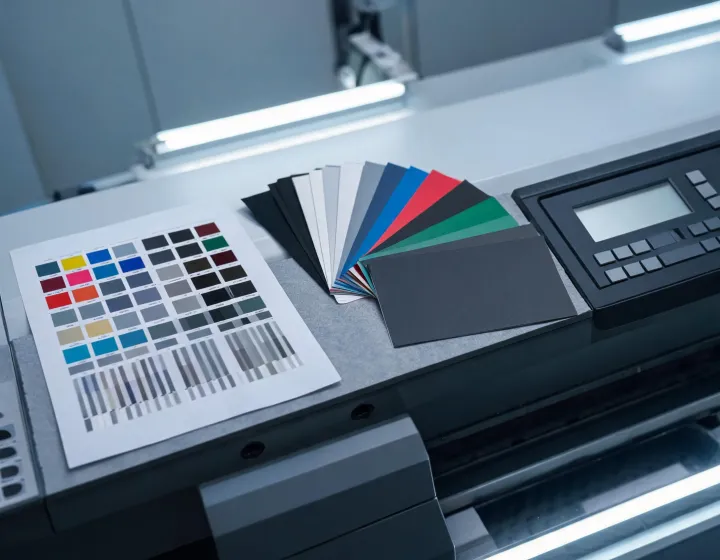
These figures are screening prompts for the commercial eco solvent printer brief. They are not measurements this desk has taken on a named serial number.
| Field | How to write it |
|---|---|
| Media width | Ask whether the roll is 1,370 mm or 1,600 mm, then ask the printable width in mm separately. |
| Resolution | Record dpi, such as 720 × 1440, and refuse a speed claim that omits the pass count. |
| Throughput | Request m²/h at 6-pass and again at 8-pass on the vinyl you actually run. |
| Input power | Voltage, hertz and phase. A 220 V single-phase circuit is not interchangeable with a three-phase feed until the supplier says so. |
| Room | Ambient temperature in °C and relative humidity. Note if the room falls outside 20 °C to 28 °C. |
| Service access | Ask if the drawing needs 800 mm behind the frame for roll changes. |
| Duty | Hours per day and days per week, so head maintenance is quoted against use. |
Each row is a request, not a result this site has already verified. Tie the file to one manufacturer and one model number.
Current sheet for rated power, input voltage, and stated resolution steps. Ask which date and which revision you were sent.
Plan view with service access and the crate size. Use it to check doors before the Incoterm conversation, not after the machine ships.
Factory acceptance test description: media, image, and who witnesses it. Remote video is a method to discuss, not a default.
RIP name, version limits, and the control interface for a cutter if the commercial set includes one. Software seats are a cost line.
Ink, flush and wipers, plus a spare parts list for the duty cycle you declared. “Compatible ink” is not a specification until the supplier names it.
A specification deviation sheet that lists every difference from your brief, including a narrower printable width or a different heater.
The smaller machine number can be rational when consumables, freight, commissioning and spares truly match. If they do not, you are comparing different purchases. Delivered cost is the sheet that shows the missing lines. This site does not publish a savings figure.
A standard commercial frame is easier to document and often faster to quote. A custom width, extra heater zone or unusual take-up can be necessary for the graphic length you run. Price the custom items as options with their own lead time, and keep the standard offer visible beside them.
Early screening can use the advertised resolution. Approval needs the conditions. Ask whether the quoted throughput includes drying, and whether color was judged on your media or on the supplier’s sample. Put the answer in the deviation log if it differs.
Cross-check shop constraints on the large-format page and configuration names on product scope. The procurement brief repeats the field list in article form.
Paste the open fields into the form. Mention bill of materials gaps, preventive maintenance intervals you need quoted, and noise or ambient temperature limits if the room is shared. No upload control is added; describe the file you can send later.
Qualified buyer support
up to 3%
Eligibility applies to qualified business buyers and is confirmed after we review your product, quantity, destination, and sourcing requirements.